

Best AI Design Agents in 2026: An Honest, Tested Guide

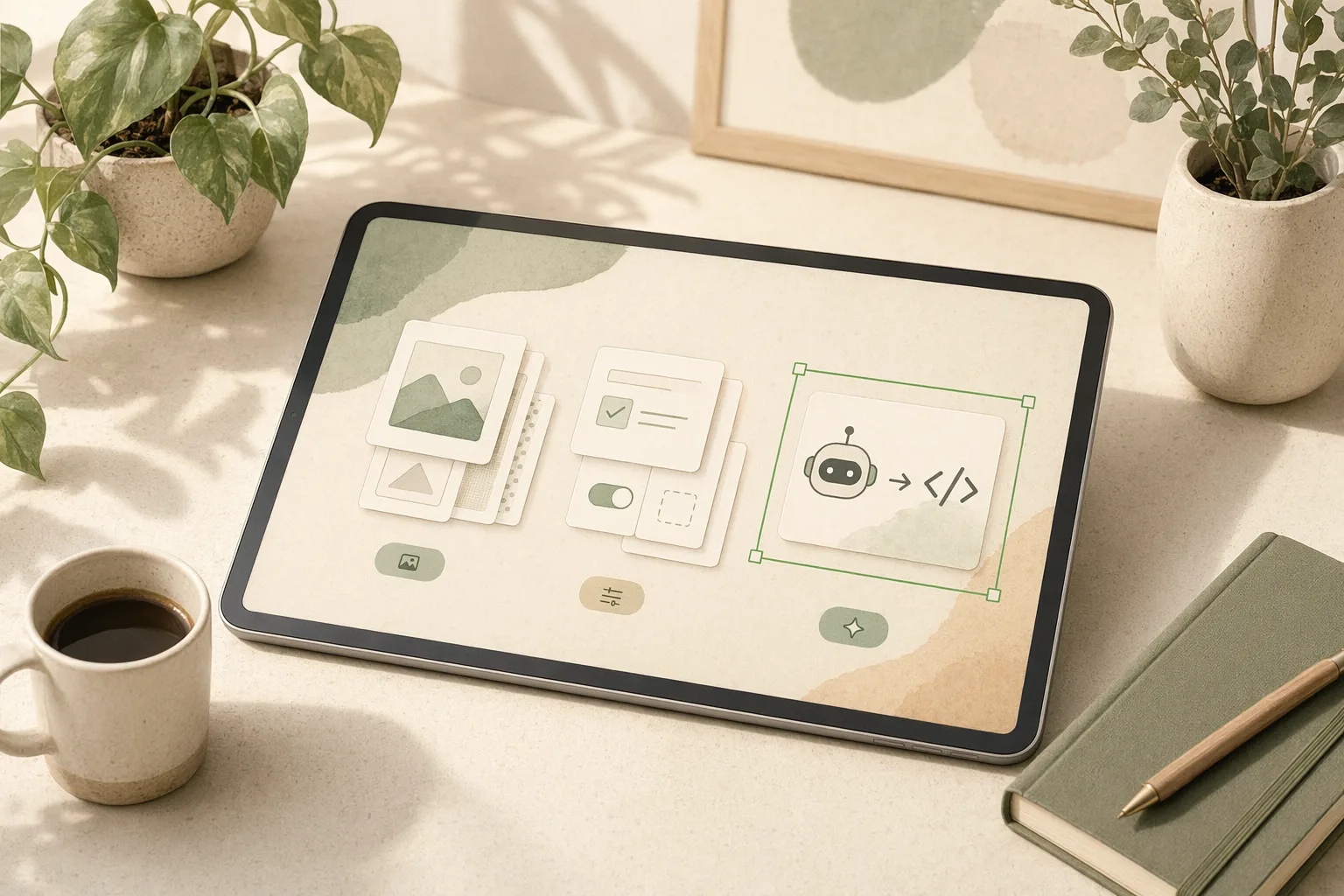
Search best AI design agents and the results can’t agree on what the words even mean. You’ll get creative cloud suites, a few “AI design agencies” (which are companies, not software), image and video generators, and — buried near the bottom — the thing the term is actually starting to mean: an agent that takes a design all the way to shipped code. Three completely different products wearing one label. The useful first move isn’t picking a tool; it’s deciding which kind of design agent you actually need.
I work on the design-to-code pipeline at OpenDesign, which is squarely in the third category, so I have a stake here — and I’ll mark plainly where our own tool fits and where it doesn’t. This isn’t a ranking. It’s the map: what “AI design agent” really splits into, and the one question that sorts it.
First, what counts as an “AI design agent”?
A real agent does more than answer a prompt once. The best ones in 2026 understand a brief, hold context (your brand, your design system), run multi-step work, and hand back something usable without you babysitting each step. By that bar, the field splits three ways — and they barely compete with each other:
- Creative production agents — generate brand assets, images, and video at scale.
- Task / workflow agents — assist a specific design step (requirements → flows, mockups).
- Agent-native design-to-code — turn the coding agent you already run into a design engine that ships.
The 2026 scorecard
| Category | Tools | What it produces | You own it? | Best when |
|---|---|---|---|---|
| Creative production | ImagineArt, Canva AI, Adobe Firefly, Runway | Images, video, on-brand assets | Cloud account | You need marketing/brand creative at scale |
| Task / workflow | Lindi, Figma AI | Flows, mockups, in-canvas assists | Cloud doc | You want a specific design step accelerated |
| Agent-native design→code | OpenDesign | Prompt → shipped UI via your agent | Plain files, fully yours | You want design that becomes ownable code |
Read it by what you’re trying to produce, not top to bottom. A brand-video agent and a design-to-code agent are not substitutes — picking by “which is best” without naming the job is how these lists mislead.
The categories, with the part nobody prints
Creative production agents — ImagineArt, Canva AI, Adobe Firefly, Runway
The biggest, most visible group: agents that generate images, video, and brand assets. Canva’s Brand Kit applies your colors and fonts across everything it makes; Runway produces consistent video; ImagineArt bundles image/video/audio in one suite. For a marketing team that needs publish-ready creative at volume, this is genuinely the category.
The part nobody prints: these make assets, not interfaces. They won’t design a product — no flows, no states, no components, nothing that ships as an app. If your “design” is a campaign, perfect. If it’s a UI, this is the wrong aisle.
Task / workflow agents — Lindi, Figma AI
Narrower and more useful for product work: agents that accelerate a specific step. Lindi turns requirements into interface flows and early mockups aligned to a design system; Figma AI assists inside the canvas you already use. They slot into an existing workflow instead of replacing it.
The part nobody prints: they stop at the artifact they’re good at. You get flows or mockups; the jump to working, shipped code is still a separate, manual handoff — and the output lives in their cloud.
Agent-native design-to-code — OpenDesign
This is the one we build, and it’s where “AI design agent” is heading. Instead of a new cloud app, OpenDesign turns the coding agent you already run — Claude Code, Codex, whichever — into a design engine: every design system is a DESIGN.md, every capability a SKILL.md, and the work goes from prompt to shipped code in plain files you own. The agent doesn’t just draw a screen; it produces the thing you ship.
Honest placement: it’s not a brand-asset generator and it’s not a multiplayer canvas. It won’t make you a marketing video or replace Figma for five people redlining one file. What it does is close the loop the other two categories leave open — design that becomes ownable code, with no per-seat meter — which is exactly the “agent” part most of this market hasn’t delivered yet. See how it fits designers and product teams, or the broader design-to-code tools comparison.
A note on “AI design agencies”
Half the SERP for this term is agencies — human studios that use AI. Useful if you want to outsource the work to people; irrelevant if you want software. Don’t let them pad your tool shortlist.
The one question that sorts it
Ask: what do I have when the agent is done, and can I ship it?
- “Images / video / brand assets” → creative production agent.
- “Flows or a mockup to hand off” → task / workflow agent.
- “Code I can ship and own” → agent-native design-to-code.
Every other criterion — pricing, speed, integrations — is downstream of that answer.
Free vs paid
- Free tiers are real for trying each category; the meter starts at scale, export, seats, and higher fidelity.
- Agent-native is a different shape of cost: when the agent is one you already run plus files you own, there’s no per-seat design-tool meter at all — the cost moves to setup and the agent itself.
When you don’t need an AI design agent
- One-off asset. A single image or a quick edit doesn’t need an agent; a plain generator is faster.
- Pixel-precise multiplayer canvas work. Still a job for Figma/Penpot, not any agent.
- Mature, complex product. Past a real design system and deep edge cases, generation assists but doesn’t replace deliberate design work.
FAQ
What is an AI design agent? Software that does multi-step design work from a brief — not just one image from one prompt. In 2026 the term covers three categories: creative production (assets/video), task agents (flows/mockups), and agent-native design-to-code (design that ships as code).
What is the best AI design agent? Depends on the job. Brand assets and video: ImagineArt, Canva AI, Runway. Flows and mockups: Lindi, Figma AI. Design that becomes ownable code: an agent-native tool like OpenDesign.
Are AI design agents the same as AI design tools? Overlapping but not identical — an “agent” implies multi-step, context-holding autonomy, while many “AI design tools” are single-prompt generators. See the broader best AI design tools guide.
Do AI design agents replace designers? No. They compress production and first drafts; judgment, taste, edge cases, and “is this right” stay with the designer.
The takeaway
“AI design agent” isn’t one product — it’s three jobs sharing a buzzword: make creative assets, accelerate a design step, or turn design into shipped code. The lists rank logos across all three and help no one. Name your job first — what am I left holding, and can I ship it? — and the category picks itself. If the answer is “code I can ship and own,” that’s the bet OpenDesign is built on: your agent, your files, prompt to shipped.